




The Poole Bay Partnership
Poolebay.net was first published in response to the high level of public interest
in the major beach replenishment projects of 2005-
Copyright © 2005 -



Other sources of local coastal information


These pages contain only archived material

Project videos from the team

Poole Bay Nearshore Beach Replenishment Trial 2015
Borough of Poole has been awarded £260,000 funding to trial a beach replenishment process that could make future projects more economically and environmentally sustainable.
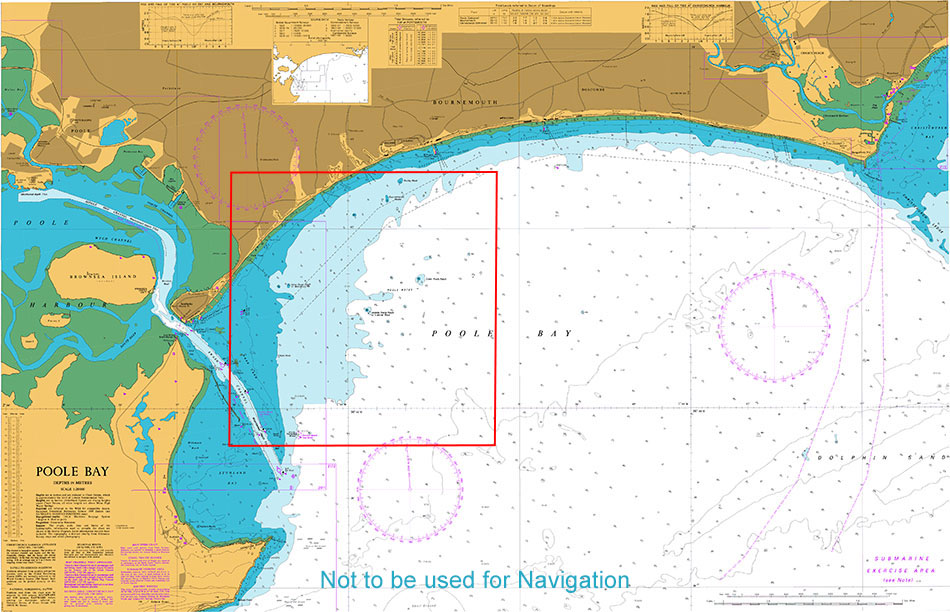
Poole Bay overview: the area shown in the detail map (below) is marked in red
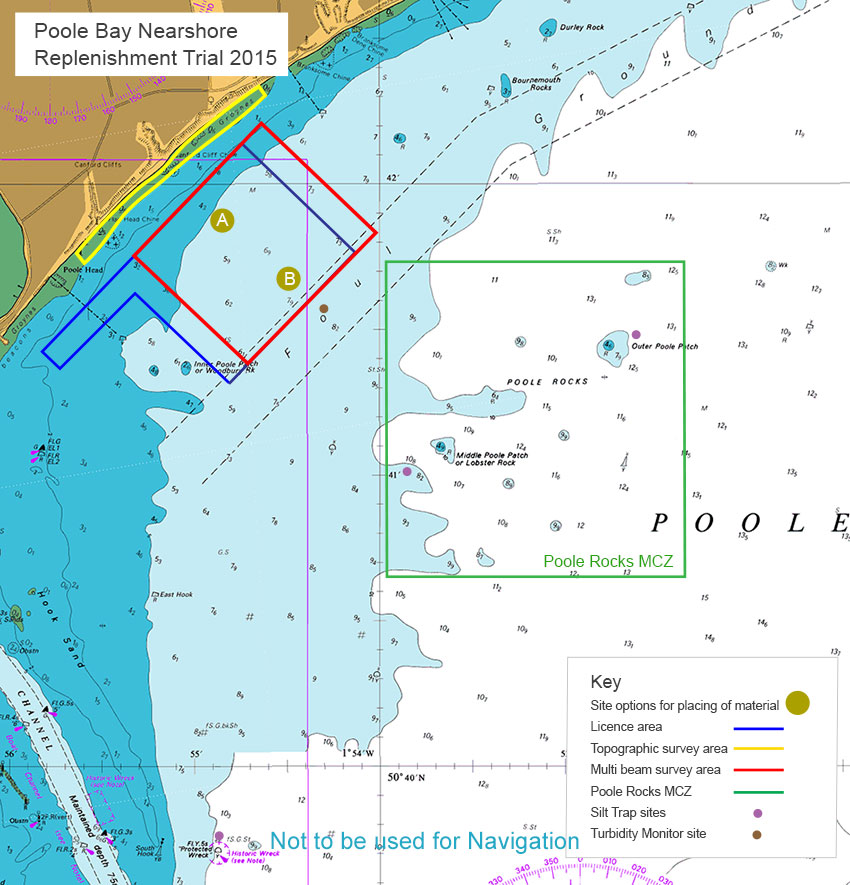
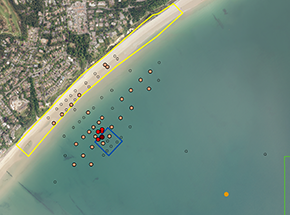
Detail map approximately 30,000 cubic metres of dredged material as close as possible to site A on a set grid pattern.

The funding enables a trial to investigate whether relatively small amounts of sand placed on the seabed close to shore can be moved on to the beach by natural wave forces.
It is hoped that a trickle feed of sand on a regular basis will stabilise beach width in Poole Bay and provide a more economically and environmentally sustainable solution to traditional beach renourishment solutions. This is the first trial of its kind in the UK and the findings could become important at a national level.
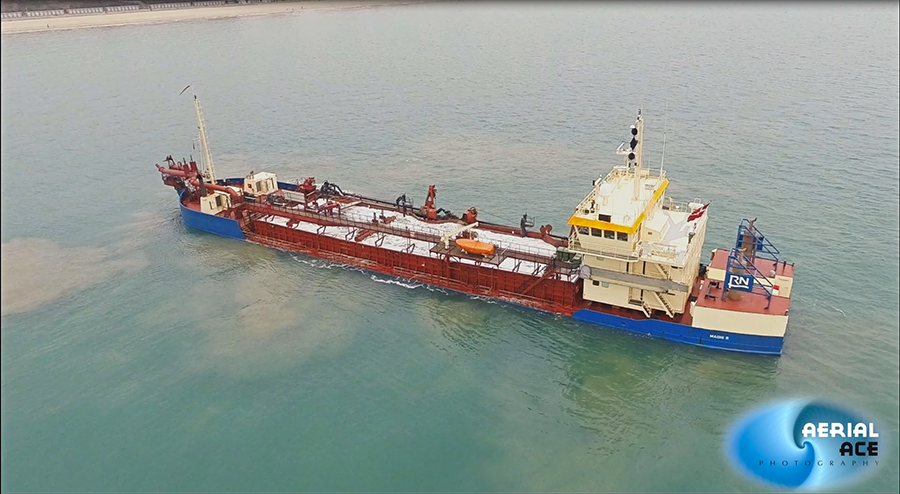
The trial started with the placement of approximately 30,000 cubic metres of sandy
material offshore at Canford Cliffs between 9th -
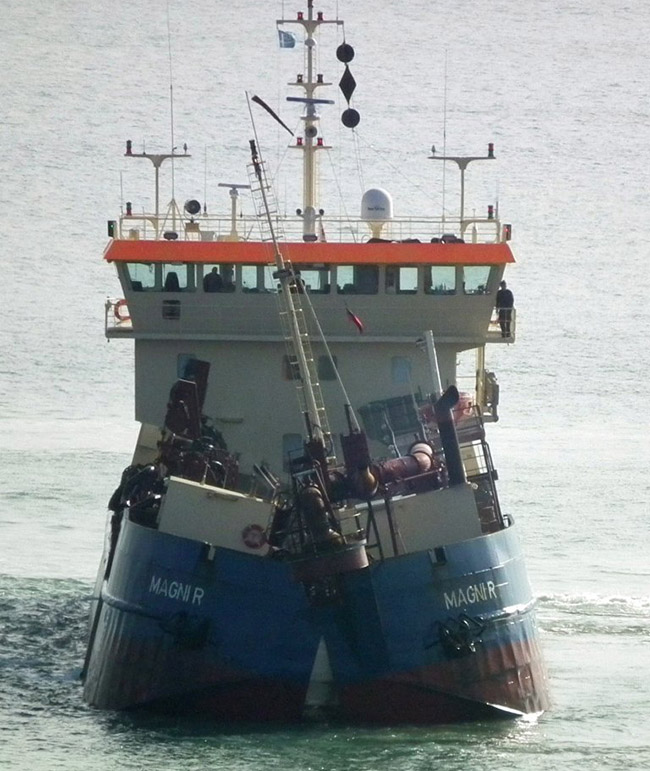
The sandy material was provided by Poole Harbour Commissioners, dredged from within the main channel of Poole Harbour and placed as close as possible to site A as indicated on the detail map (below right) on a set grid pattern.
Monitoring
The Coastal Channel Observatory (CCO) have begun their surveys to trace the movement of sand on the seabed. Over the next few months they will also be carrying out topographic surveys on the beach, bathymetric surveys in the water, and we will be taking photographs from fixed points overlooking the beach on a regular basis.
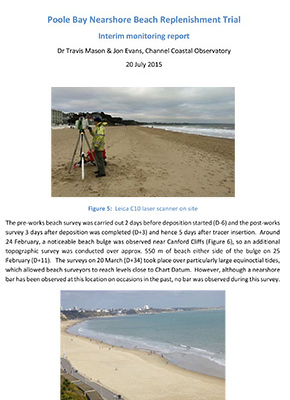
- Now available: The CCO Interim monitoring report, July 2015 (PDF, 2Mb)
- Previous report: The CCO Pre-
monitoring report, May 2015 (PDF, 8Mb)
Preliminary Observations - July 2015


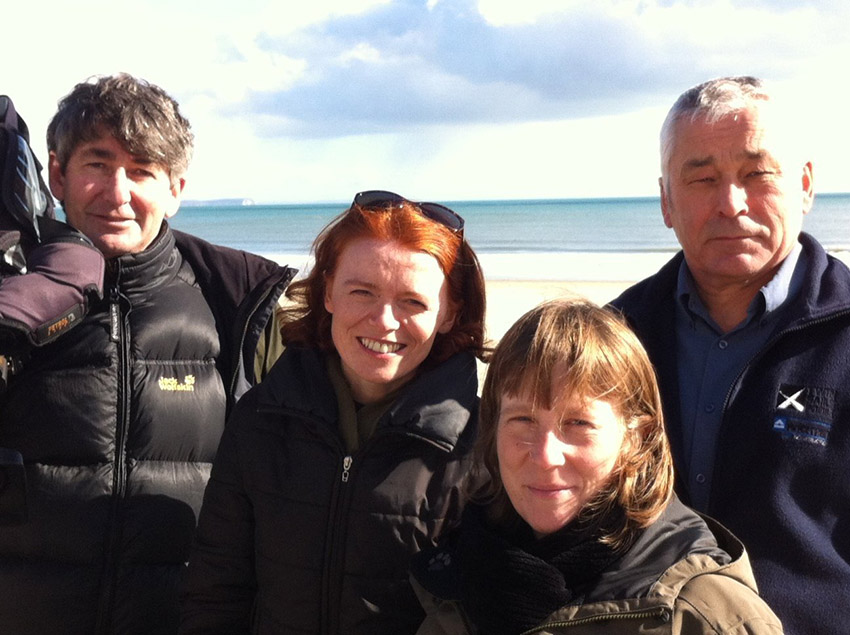
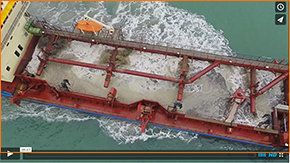
3rd March: Briony Leyland from BBC South Today visited Poole to interview our Coast Protection Manager, Stuart Terry about this project.
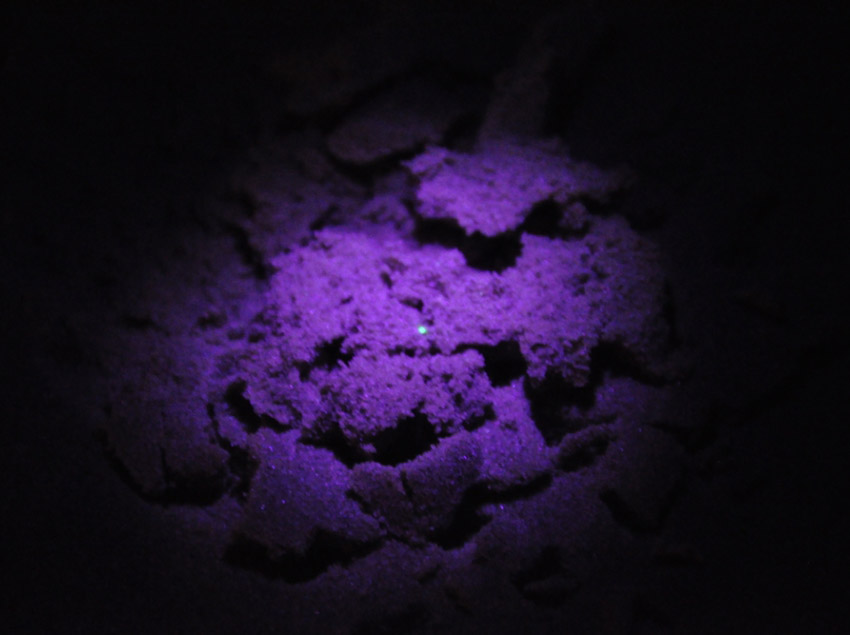
Play the video for an explanation of the trial and to see the Tracer sand under UV light.
Beautiful sandy beaches attract thousands to the south coast but maintaining them presents a big challenge. Now a project being trialed in Poole is using florescent sand to find out if the power of nature can tackle the problem.
Posted by BBC South Today on Tuesday, 3 March 2015
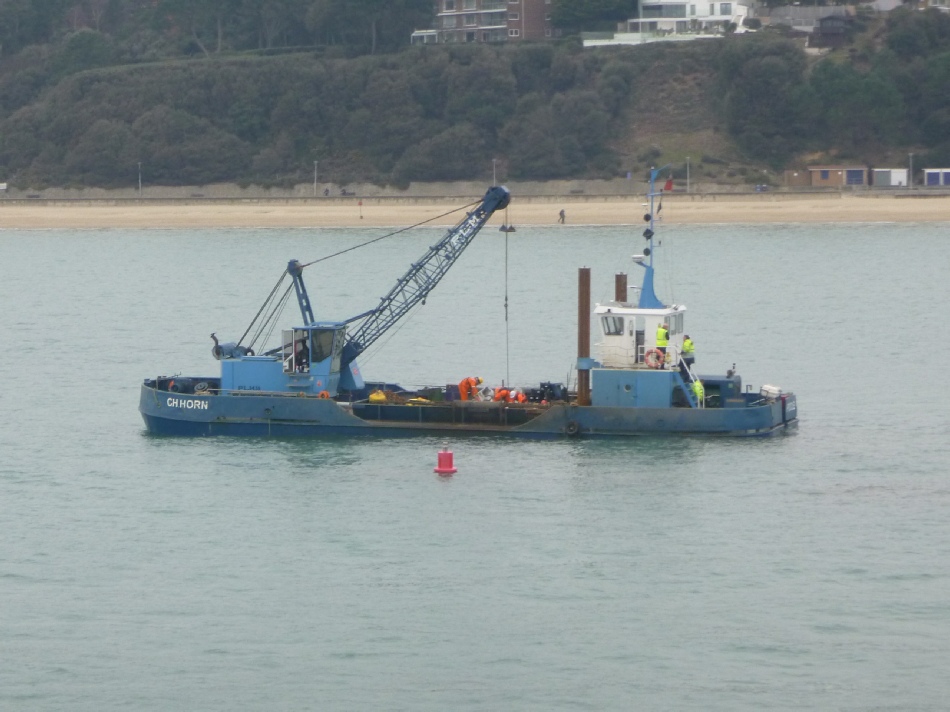
Placing material on the seabed
Tracer Searches will record the movement of sand over time.
Placement of dredged material having been completed, the Tracer particles (fluorescent sand) are loaded into large bags and lowered to the seabed in the same area in order to track movement of the material over a period of months
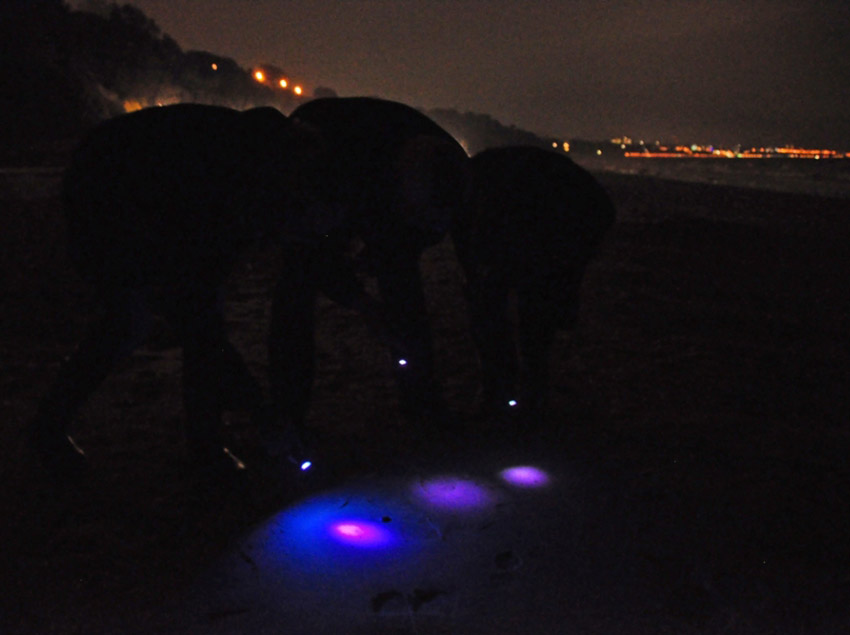
Tracer particles (fluorescent sand) can be seen under a simple LED UV torch; the project team can sometimes be found scouring the beach at night looking for them!
Initial results
Loading & Releasing dredged material
|
Index |
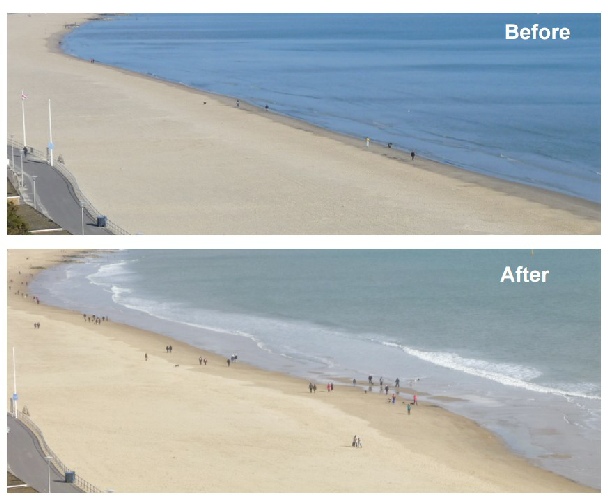
- Tracer sand has been found on the beach showing a sediment movement pathway from the trial site to the beach
- 2,000 cubic metres of sand has moved from the trial area although it is difficult to identify and measure small amounts of sand spread across the beach
- The highwater line at the beach has changed (as shown in the ‘After’ photo above)
indicating a localised build-
up of sand, although this could be a result of a change in wave energy approaching the beach (on the sand)
Tracer Particles
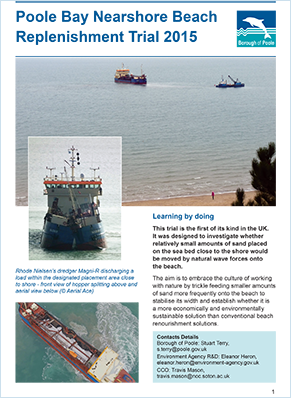
Project leaflet July 2015 explaining what we did & including preliminary observations (PDF, 2Mb)

Interim monitoring report July 2015 (PDF, 2Mb)

© Crown Copyright and/or database rights. Reproduced by permission of the Controller of Her Majesty’s Stationery Office and the UK Hydrographic Office (www.ukho.gov.uk).